Throughout my work, I apply a critical and justice-informed lens to policies and interventions developed in response to the climate crisis. I am particularly interested in the politics and processes through which climate ‘problems’ are framed and ‘solutions’ are negotiated. Across different empirical contexts, I examine the actors involved in these processes, the forms of knowledge and expertise they draw on, and the political, structural, and organizational conditions that shape their work.
My research spans three interconnected areas: offshore wind and the green energy transition in the United States, urban climate planning in India, and international climate governance and finance. Across these areas, I consider how climate ‘best practices’ and justice ideals are translated into policy and practice, the tradeoffs that emerge, and whose knowledge, interests, and experiences shape plans and interventions.
Detailed descriptions of each area of my research and a list of publications are below. For more information about my research and writing, please reach out.
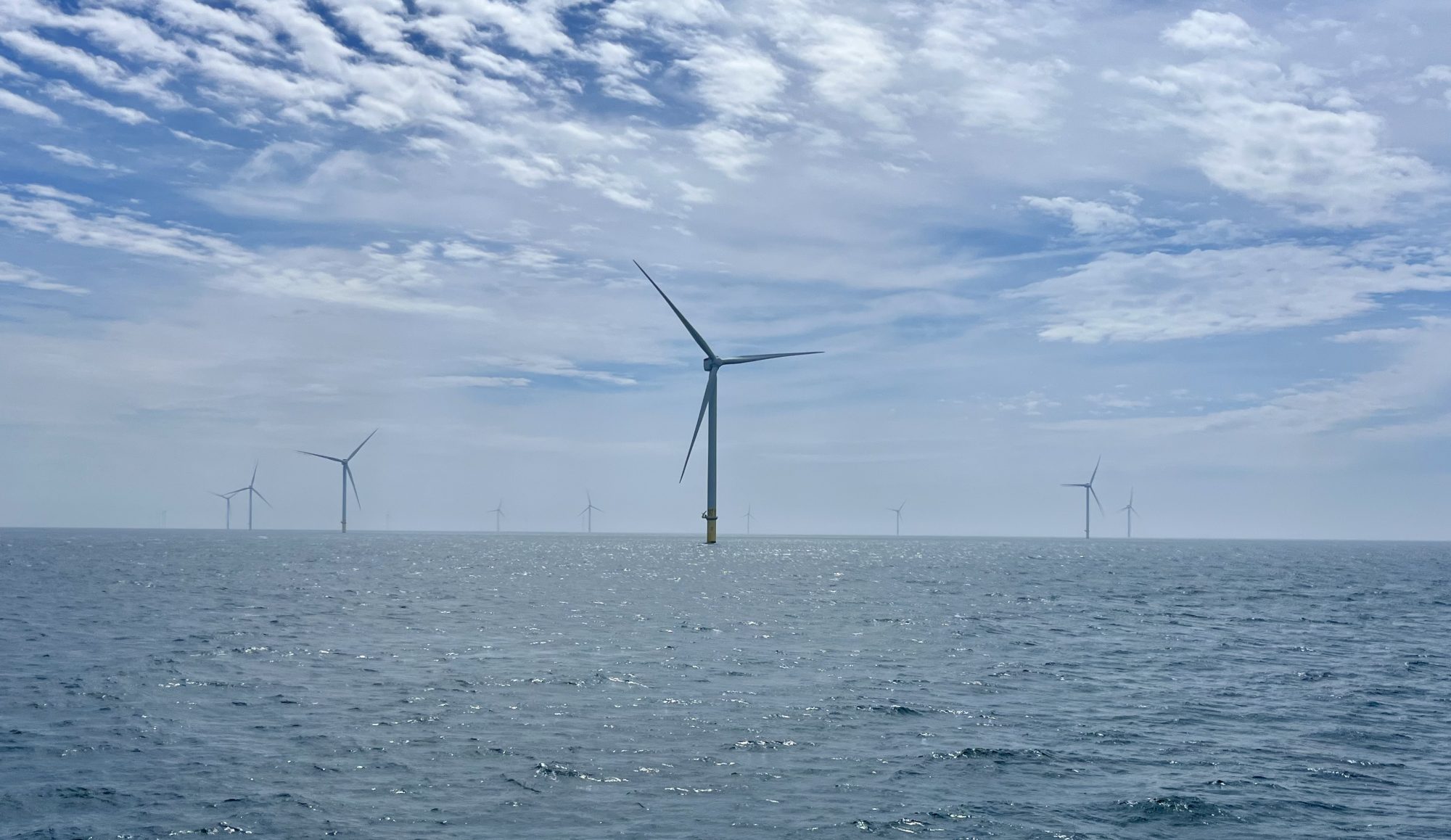
My current research centers on the politics and social implications of offshore wind development in the United States. Offshore wind has become an important part of the broader transition toward renewable energy but has generated considerable political contestation. Beyond debates over renewable energy and climate change, offshore wind raises questions about the local consequences of the green energy transition, particularly for coastal communities that depend on marine resources. My work examines how these consequences are experienced and negotiated, with particular attention to the commercial fishing industry.
As a postdoctoral research associate at the University of Massachusetts Amherst’s Academic Center for the Reliability and Resilience of Offshore Wind, I have conducted extensive qualitative fieldwork on offshore wind development in southern New England. My work focuses on New Bedford, a historic center of New England’s fishing industry and the largest commercial fishing port in the United States by the value of its commercial fish landings. New Bedford has also become an important hub for offshore wind development. The port was redeveloped to function as a staging site for offshore wind and was used during the construction of the now-complete Vineyard Wind 1 project. The city’s position at the intersection of offshore wind and commercial fishing makes it an important site for examining how competing interests and priorities associated with the energy transition play out in practice.
Beyond the global need to move away from fossil fuels, offshore wind developers have proposed local environmental and conservation benefits as well as regional economic growth. Developers have suggested that negative impacts on the fishing industry will be limited, though offshore wind lease areas in southern New England overlap with fishing grounds and collectively cover an area larger than Rhode Island. While construction remains relatively limited and disrupted in this time of political uncertainty, fishers have raised concerns over how offshore wind will affect marine ecosystems, fisheries, and, by extension, their livelihoods.
Through interviews with fishers and other stakeholders along with observations of public meetings, I examine how members of the fishing industry have experienced the planning and construction of offshore wind projects. I am primarily interested in how fishers understand the fairness of development processes and efforts to mitigate negative impacts. Compensation and other economic initiatives undertaken by offshore wind developers in response to regulatory and public pressure provide a window into these questions. I examine how these initiatives, including payments meant to offset economic losses and opportunities for fishers to undertake contract work supporting offshore wind construction, have been designed, implemented, and experienced.
While opposition to offshore wind development remains widespread among fishers and many view opportunities for participation and compensation as insufficient, I find variation in their experiences and perspectives, especially among those who have worked for offshore wind developers. For some, this work has provided a predictable source of income during lean fishing years, although politically driven disruptions to offshore wind development have interrupted these employment opportunities. Beyond these economic considerations, fishers also hold differing views about the importance of the energy transition and the tradeoffs involved in offshore wind development.
This research sheds light on the politics and contestation involved in pursuing energy justice. Moving beyond the idealized principles and approaches outlined in existing scholarship, I examine the practical challenges of negotiating a just energy transition amid competing interests, political pressures, and bureaucratic and organizational constraints. I characterize interventions undertaken by developers in response to regulatory pressures as ‘attempted energy justice,’ emphasizing that efforts intended to address concerns about fairness do not necessarily resolve these concerns and may even exacerbate perceptions of injustice. Persistent concerns among fishers underscore the importance of affected communities’ perspectives in efforts to promote energy justice. More broadly, this research highlights the difficulty of reconciling competing understandings of justice and managing the tradeoffs inherent in the green energy transition.
In the coming years, I plan to build on this work and expand my focus to prospective floating offshore wind development in the Gulf of Maine. Unlike the fixed-bottom turbines in southern New England, floating turbines require more extensive underwater infrastructure and bring additional uncertainty about impacts on fishing activities and marine ecosystems. I am particularly interested in how lobster fishers understand and respond to this prospective but politically uncertain development. The Maine lobster fishery is distinctive in its small-scale and owner-operated structure and its history of co-management, through which fishers participate directly in regulatory processes and ongoing efforts to maintain a sustainable fishery. Lobstering is deeply embedded in the culture of coastal communities in the Gulf of Maine, and lobster fishers are often presented as stewards of marine resources. I seek to understand how their conceptions of conservation and resource management shape their perceptions of offshore wind, including what they consider just development processes and fair compensation.
Across these projects, I seek to understand the practical challenges of pursuing a just energy transition when global climate goals and the pressing need to mitigate greenhouse gas emissions intersect with communities’ livelihoods, knowledge, and lived experiences.
While completing my PhD at Brown University, my research centered on the processes and politics of climate planning in urban India. The country’s growing urban population, now exceeding half a billion people, faces profound climate risks compounded by social, economic, and political inequalities. My work primarily focuses on Mumbai and the creation and early implementation of the Mumbai Climate Action Plan (MCAP). In this coastal megacity, extreme heat has intensified, as has unpredictable flooding during the annual monsoon. Infrastructural issues exacerbate these and other hazards, while inequalities in access to economic and social resources and political representation shape how climate risks affect Mumbaikars, approximately half of whom live in slums or informal settlements.
The MCAP was developed as part of Mumbai’s participation in the international C40 Cities Climate Leadership Group. Existing research has documented the proliferation of urban climate plans through networks such as C40, as well as the growing expectation for cities to engage in such work and signal ‘climate readiness.’ Critical scholarship suggests that such plans tend to be technomanagerial exercises, emphasizing infrastructural interventions or technical fixes rather than addressing the underlying sociopolitical causes of climate vulnerability. However, while raising important concerns, much of this scholarship remains focused only on international networks and their ‘best practices’ or the formal content of plans. Less attention has been given to how plans are created, how local political contexts shape plans, who carries out this work, what forms of knowledge and expertise are privileged, and how nonlocal ‘best practices’ travel between global and local contexts. My research addresses these gaps, looking beyond the formal content or stated intentions of plans to instead examine the processes through which they are created and implemented.
I began fieldwork in India in 2019. During initial visits, I was based at the Centre for Policy Research in Delhi and studied some of the country’s early urban climate plans, many of which were developed through international initiatives. These plans were written by nonlocal consultants working outside of urban governments and saw little uptake or implementation. Urban climate planning in India remained limited until work began on the MCAP in 2020. The plan emerged amid state-level political interest in climate action and Mumbai’s renewed participation in C40, which required member cities to develop climate action plans. The Mumbai office of the World Resources Institute India (WRI) led the MCAP’s development, working with urban bureaucrats to create a plan intended to address local climate concerns, apply international ‘best practices’, and meet the sometimes divergent expectations of local politicians and C40.
The MCAP was launched in 2022, though early implementation efforts were disrupted by changes in state-level political leadership. WRI staff nevertheless pushed for governance-focused implementation of the MCAP, particularly by building capacity within Mumbai’s Environment Department and establishing the C40 best practice of ‘climate budgeting,’ an annual process for tracking climate-relevant spending in the urban budget and monitoring progress toward MCAP goals. Progress was halting and impacted by state and local politics, even as the MCAP and related implementation efforts attracted positive international attention.
I arrived in Mumbai in 2022 as these implementation efforts began. With the support of a Fulbright research fellowship, I spent two years in the city, embedded at WRI’s Mumbai office as a participant observer. I spent most days working alongside WRI staff and regularly joined meetings with urban officials about MCAP implementation. This vantage allowed me to observe the deeply political nature of implementation efforts and the strategies used to make progress amid substantial organizational constraints. Working with sympathetic bureaucrats and leveraging public concern over pressing issues including air pollution and monsoon flooding, WRI staff advocated for the expansion of Mumbai’s Environment Department from one employee to nearly fifty, as well as an increase in its stature and reach within the municipal government. WRI staff also helped establish climate budgeting as a routine governance practice, intended to provide transparency and accountability around climate-relevant spending and interventions.
This ethnographic perspective allowed me to move beyond critiques of urban climate plans as simply technocratic exercises and examine, in real time, how climate policies are negotiated with and within urban governments. In a recent article in the International Journal of Urban and Regional Research titled “Reconsidering incrementalism: Implementing the Mumbai Climate Action Plan,” I argue that WRI staff played a critical brokerage role in this process. Drawing on their dual position as local actors familiar with Mumbai’s governance context and climate experts working for an international organization, WRI staff encouraged the incremental layering of novel climate policies derived from international norms atop existing governance institutions. Strategically pursuing incremental rather than wholesale changes, they formalized a climate-focused agenda within an otherwise intransigent governance setting. These efforts helped to build climate-specific governance capacity, though the longer-term effects of the MCAP, including implications for urban climate justice, remain to be seen. While many of the interventions proposed in the MCAP are infrastructural and the plan retains a technomanagerial orientation, my research reveals the deeply political processes underlying its creation and implementation, including how climate problems are defined and solutions imagined.
My dissertation develops this argument in greater depth. I show how urban climate planning is driven not only, or even primarily, by the material threats posed by the climate crisis but also by growing expectations for ‘global’ cities to demonstrate climate readiness and contribute to international emissions-reduction goals. I compare planning efforts in Mumbai with those in Bengaluru and Kolkata, examining how different political and bureaucratic conditions, along with differences among the expert practitioners involved, shape planning processes. In these other cases, local contestation over whose voices matter in planning, along with differing notions of conservation and climate preparedness, shaped efforts to make climate planning more locally grounded, albeit in different ways. While WRI also developed Bengaluru’s plan in collaboration with urban bureaucrats, politicians in Kolkata chose to withdraw from C40 and create an independent plan. I analyze the tradeoffs of positioning climate planning within international networks and the implications of making plans, and the knowledge and expertise used to produce them, more or less ‘local.’
This work forms the basis for my book project, which will expand on my dissertation to consider how political and governance contexts shape urban climate planning. Building on my analysis of the roles of expertise and international ‘best practices,’ I will pay particular attention to how competing priorities and tradeoffs are negotiated, how justice is envisioned, and what these processes tell us about possibilities for more equitable and lasting urban climate action.
My focus on climate policy extends to global questions on climate finance and justice, primarily through my role as a Senior Researcher at Brown University’s Climate and Development Lab (CDL). Since 2018, I have attended several sessions of the United Nations climate negotiations, tracking developments on finance for adaptation and loss and damage, two critical areas of international climate policy with significant implications for climate justice across scales.
Despite the establishment of multiple mechanisms intended to support climate adaptation and address loss and damage, financial flows remain limited and structural features of these mechanisms raise concerns about power, representation, and justice. In an article published in Political Geography, “The unequal geographies of climate finance: Climate injustice and dependency in the world system,” my co-authors and I examine the promises and shortcomings of adaptation finance, particularly the risks of existing finance arrangements reproducing global inequalities. A more recent published in Current Climate Change Reports, “Equity and justice in loss and damage finance: A narrative review of catalysts and obstacles,” applies a similar lens to the then-new Fund for Responding to Loss and Damage, examining the structural changes needed to promote more just outcomes.
Drawing on my experience conducting research at the UN climate negotiations and studying climate adaptation policymaking and planning, I also contributed to a report published by the International Institute for Sustainable Development, “National monitoring, evaluation, and learning systems for climate change adaptation: A comparative analysis of nine countries.” This work has informed discussions on the Global Goal on Adaptation.
peer-reviewed articles
Ike Uri. 2026. “Reconsidering incrementalism: Implementing the Mumbai Climate Action Plan.” International Journal of Urban and Regional Research. doi.org/ 10.1111/1468-2427.70076
Ike Uri, Stacy-ann Robinson, J. Timmons Roberts, David Ciplet, Romain Weikmans, and Mizan Khan. 2024. “Equity and justice in loss and damage finance: A narrative review of catalysts and obstacles.” Current Climate Change Reports. doi.org/10.1007/s40641-024-00196-6
David Ciplet, Danielle Falzon, Ike Uri, Stacy-ann Robinson, Romain Weikmans, and J. Timmons Roberts. 2022. “The unequal geographies of climate finance: Climate injustice and dependency in the world system.” Political Geography. doi.org/10.1016/j.polgeo.2022.102769
works in progress
Ike Uri and Uttara Purandare. “Beyond the Big Four: Mapping the field of urban governance consulting in India.” Under review.
Ike Uri. “Navigating opposition and opportunity: Offshore wind, commercial fishers, and attempted energy justice.” In preparation.
Ike Uri. “Outsourcing green expertise: The role of consultants in urban climate planning.” In preparation.
Ike Uri, Lubaina Rangwala, and Avni Agarwal. “The politics of local knowledge: Examples from the Mumbai Climate Action Plan.” In preparation.
policy-focused publications
Lubaina Rangwala, Sudeshna Chatterjee, Avni Agarwal, Bhanu Khanna, Ike Uri, Bina Shetty, and Raj Bhagat.2024.“Climate resilient cities: Assessing differential vulnerability to climate hazards in Indian cities.” World Resources Institute. wri.org/research/climate-resilient-cities-assessing-differential-vulnerability-climate-hazards-urban-india
Lucy Njuguna, Ike Uri, and Emilie Beauchamp. 2024. “National monitoring, evaluation, and learning systems for climate change adaptation: A comparative analysis of nine countries.” International Institute for Sustainable Development. iisd.org/publications/report/monitoring-evaluation-learning-systems-adaptation

